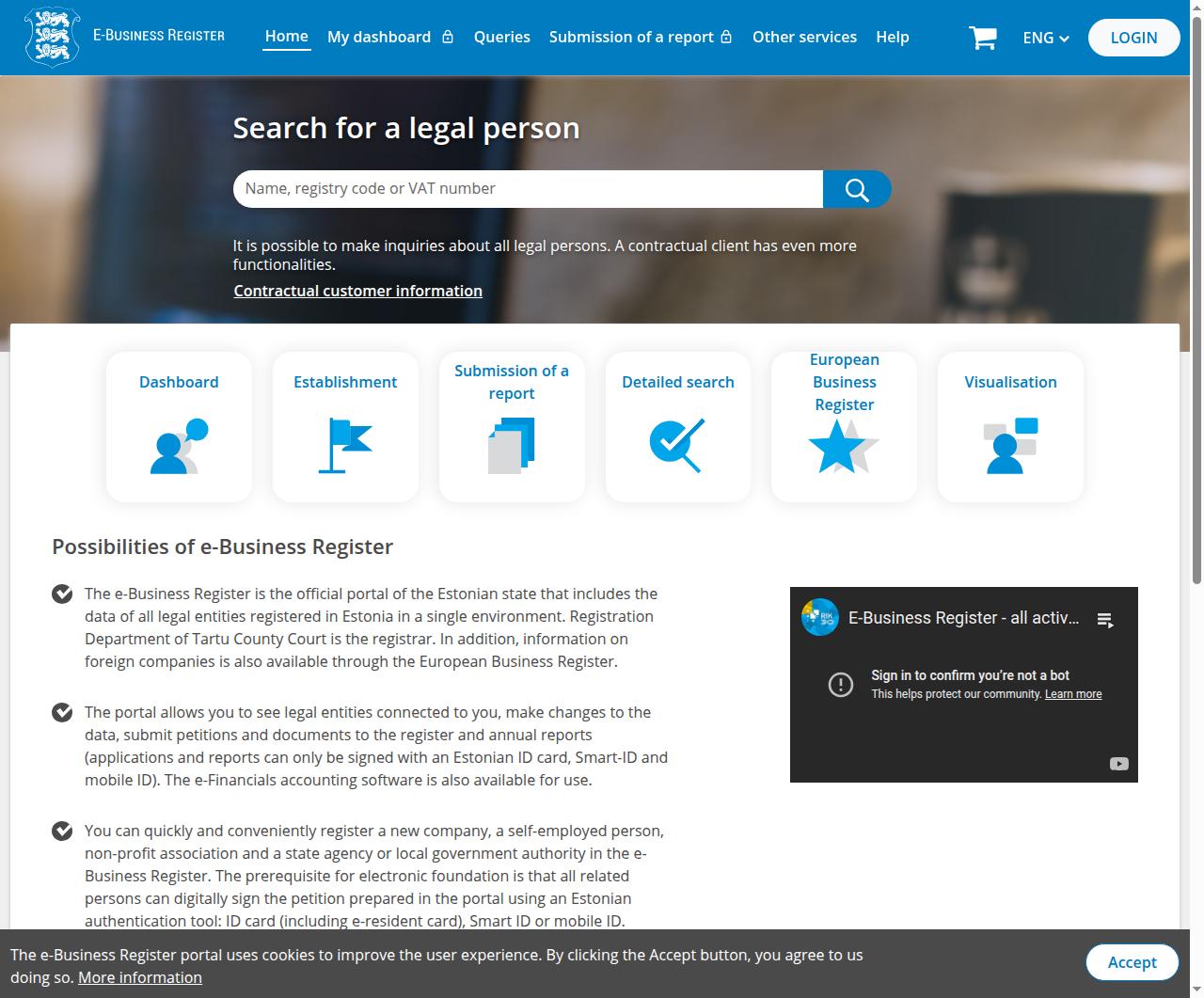
Most founders who set up an Estonian company expect banking to be the easy part. The company is registered, the e-Business Register entry is live, and now it is time to open an Estonian company bank account. That is where many run into a wall they did not see coming.
The assumption vs the reality
The e-Residency programme gives you a digital identity and the ability to manage a company remotely. What it does not give you is automatic access to banking. These are separate systems with separate gatekeepers, and the requirements are very different.
A registered Estonian company is a legal entity in the Estonian Commercial Register. A bank account requires a financial institution to accept you as a client. The bank has its own compliance obligations, its own risk appetite, and its own criteria — none of which are tied to your e-Residency status.
Many founders assume that because Estonia made it easy to register a company, the banking part will follow the same logic. It usually does not.
What banks actually look for
Estonian banks evaluate business account applications based on their own internal compliance frameworks. While the exact criteria vary, the general pattern is consistent: they want to see a clear and verifiable connection between the company and Estonia.
This can take different forms. A company that employs people in Estonia, has local business partners, or conducts operations in the country will generally have an easier time. A company that exists only on paper in Estonia, with its founder, clients, and operations entirely elsewhere, is a different case.
Banks are not obligated to open an account for every registered company. They conduct their own due diligence, and if the connection to Estonia is too thin, the application may not go through.
For non-residents, this is the core challenge. The company is real, the business is real, but the local presence that banks look for is often not there.
The documentation gap
Even when a bank is willing to consider the application, the documentation requirements can catch founders off guard.
A newly registered company has no transaction history, no revenue, and often no contracts yet. Banks know this, but they still need something to work with. They may ask for a description of planned business activities, expected turnover, information about clients and partners, and sometimes personal financial documentation from the founder.
Founders who come prepared with a clear business description, realistic projections, and supporting documents have a much better starting position than those who submit a bare application and hope for the best.
Why timing matters
A common mistake is treating the bank account as an afterthought — something to sort out after the company is registered. In practice, the banking step can take longer than the company formation itself.
Processing times vary. Some applications are reviewed in days, others take weeks. Rejections happen, and when they do, the founder has to start the process again with a different provider. If the company needs to invoice clients or receive payments quickly, this delay can become a real operational problem.
The better approach is to think about banking before or during the formation process, not after. Understanding what will be required and which providers are realistic for your situation saves time and avoids unpleasant surprises.
Fintech is not the same as a bank — but it may be what you need
For many non-resident founders, the practical solution is not a traditional Estonian bank account at all. Fintech providers that serve European businesses often have different onboarding criteria and faster processing times.
This is not a lesser option. For companies that operate internationally, invoice in multiple currencies, and do not need a local Estonian IBAN for domestic payments, a fintech business account can cover everything they need.
The key is matching the account to the actual business requirements, not chasing a traditional bank account out of principle.
Where professional guidance helps
Banking is one of those areas where general advice only goes so far. The right provider, the right documents, and the right timing depend on the specific company — its structure, its industry, its founder’s residency, and its operational profile.
A corporate service provider that handles Estonian company formations regularly will have seen enough cases to know what works and what does not. They can steer founders toward realistic options early in the process, before time and energy are wasted on applications that were never going to succeed.
At Capture Capital, banking guidance is part of our service for exactly this reason. We help founders understand their options, prepare what is needed, and move forward with a clear plan — so that the bank account does not become the bottleneck after everything else is already in place.
Capture Capital OÜ is a licensed corporate service provider registered with the Estonian Financial Intelligence Unit under licence number FIU000432. We provide company formation, registered address, and contact person services for Estonian companies.